| 'RED RIVER' CRABGRASS
VARIETYFact Sheet 1998
Return to Crabgrass page at Farmseeds.com
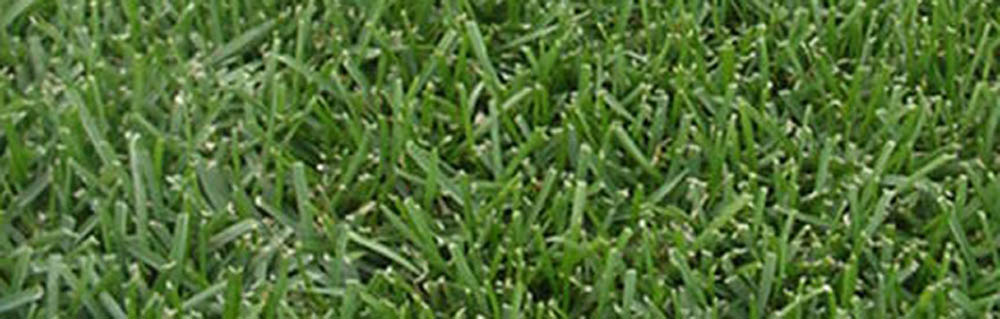
Introduction: 'Red River' Crabgrass (RRCG) is a selection of a
particular very productive ecotype of hairy crabgrass (Digitaria
ciliaris), Hairy crabgrass and large crabgrass are similar looking
forage and often considered agronomically one and the same, but they are
different.
There are six major reasons to use Red River Crabgrass in forage
production schemes: 1) It is among the highest quality and palatable of
the summer grasses we can grow; 2) It is very easy to manipulate in
planned volunteer Red River Crabgrass and winter annual grass doublecrop
syndromes; 3) It is an excellent component in many warm season forage
mixtures; 4) It is an excellent soil conservation grass; 5) It is a turf
grass; and 6) It is an excellent grass for use in animal waste
(manure/effluent) systems. All of the above being true within the
acceptable growing regions and with adequate cultural practices.
It is the intent of this fact sheet to summarize the subject of Red
River Crabgrass and Winter Annual Grass (Winter Pasture) Doublecropping
(RRCG-WPDC). The doublecrop approach more completely utilized the
resources of solar energy, moisture, soil fertility, labor, time and
space.
Variations in Red River Crabgrass and Winter Pasture Doublecrop: Without
a doubt, the single most common use of RRCG forage is in a RRCG-WPDC
syndrome. Research shows that this doublecrop yields about 60% more than
either crop as a single crop. There are many variations of chopped
forage and silage. The cool season annual grass component is most often
grazed and, in the case of grain crops, taken for grain. But, it too,
can be used for chopped forage, silage and hay or straw feeds. The
RRCG-WPDC can provide three basic seasons of green feed: Fall-Winter
phase, Spring phase and Summer phase. Both components can be further
integrated by adding legumes such as annual lespedeza or southern cowpea
for summer and hair vetch, red clover, crimson clover, etc. for winter.
The legume list is much more involved. The grazier has much flexibility
to pick and choose the combination that best fill the niches in their
own forage flow.
The Adaptation Region of RRCG extends from N.E. Colorado east to Kansas,
Nebraska, Missouri, Ohio, Iowa, Illinois, Indiana, Pennsylvania and
south to Texas and across to Florida. Some form of FFCG-WPDC fits in all
that region on proper soil types and with proper management input. It is
possible the northern adaptation areas may extend farther north. However,
the major use area is Kansas and states south and east to the coasts.
RRCG-WPDC can be used in the arid west under irrigation. In the Southern
Plains and throughout the S.E. US, the RRCG-WPDC may be very fully
employed yearlong. In the northern areas, fall phase winter pasture may
be avoided due to lower fall production and soft soils in winter, but
spring grazing or other small grains forage use and crabgrass forage use
can proceed as usual. Stockpiled crabgrass can also be carried through
fall and info winter use. The syndrome fits best on sandy, loam, silt
loan soils and least on pure silt, clay and clay loam soils.
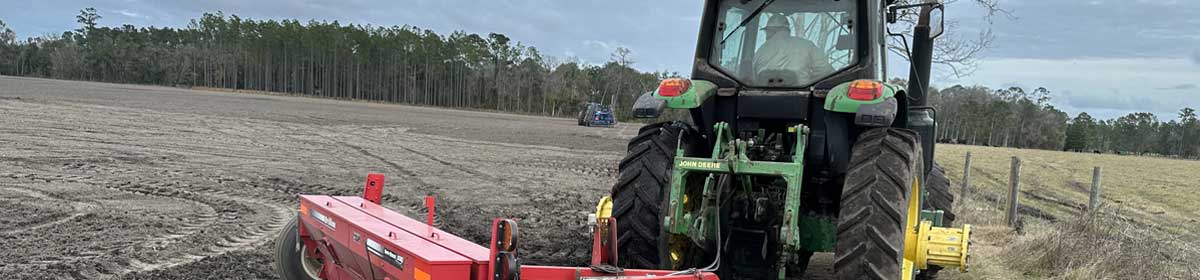
Cultural Management involves tilling, no-tillage or a combination of
tillage and no-tillage; planting or volunteer management; soil
fertilization; etc. Outlined below are a few of the more common
approaches to management of the RRCG-WPDC production.
We are assuming here that volunteer crabgrass is already in place and
that rotational grazing of all forage is the usual.
Where small grains (wheat, cereal rye, etc.) are used, the usual
practice is to minimum till or conventional till for small grains
planting, plant by drilling (or broadcasting), fertilize preplant or
immediately post plant for fall and fertilize in late winter for spring
phase. If RRCG is not emerged at the end of small grains use (usual for
cereal rye pasture) minimal spring tillage is an easy option and it will
increase RRCG production over no-tillage. RRCG is either fertilized
preemergence or after proper initial growth is achieved. This basic
approach is usual for the S. Plains, the mid west and some of the S. E.
US. There are many variations. Tillage for volunteer RRCG should be
shallow but thorough on the surface. Seed set for volunteer must be
managed for during the grazing or mechanical harvests.
Where annual ryegrass, winter legumes, or late utilization of small
grains is the case, the usual practice is very similar to above with two
major exceptions. One is that annual ryegrass is sometimes managed for
volunteer, too. This alters the tillage and fall planting techniques.
The other is that the lateness of use of these crops in the spring
conflicts with spring minimum tillage for volunteer crabgrass
production. Crabgrass is up by the end of winter forage use in this
case. If no-tillage is the choice in the spring, then fall tillage is
more important and should be done if that is an option. Some ryegrass
producers in the more humid S.E. US are aware of the positive tillage
response for crabgrass and they will do a minimum tillage at late winter
forage end, thus destroy early RRCG and go for a second stand.
There is the choice of total no-tillage for annual ryegrass of small
grains (with or without legumes) and RRCG. Chemicals or intensive
grazing may be substituted for tillage. The total no-tillage works, but
differently. Both crops produce later and less yield than under tillage
but they are still there. In units including bermudagrass, it will
gradually take over. Fescue will take over in fescue country.
Miscellaneous other grasses invade everywhere. Tillage suppresses plant
succession to maintain more pure RRCG>
Production of stocker cattle beef/acre in the well run RRCG-WPDC is
usually 500-900 pounds beef/acre in the South Plains and over 1000 and
up to 2000 pounds/acre in the S. E. US. These are real yields. The range
depends on area, soil, management, cattle size, etc.
Fertility Management is very important. On phosphorus deficient soils,
banded nitrogen-phosphorus fertilizer with the winter crop seed is very
important for early winter crop production and total production. We
apply all the years phosphorus and potassium needs during the winter
crop phase. Lime can be applied anytime, but it is best applied before a
tillage operation. Nitrogen (N) should be applied at usually recommended
rates early in the growing season for each phase, but NOT during the 1
leaf to 4 leaf RRCG seedling stage. To do so may thin or kill that
seedling stand. Total N for fall phase winter pasture may range 50 to
100 lbs./ac., spring phase N may range 50 to 150 lbs/ac. and N for
crabgrass may range 50 to over 100 lbs/ac. The range depends on climatic
area and production goals.
|